Celebrate Athletic Training Month with a Functional Movement Screen
Move Better, Train Smarter, and Stay in the Game with Therapy Solutions’ Athletic Trainer
This March, we’re celebrating Athletic Training Month, a time to recognize the professionals who help people stay active, recover safely, and perform at their best.
Many people see athletic trainers on the sidelines during a game and assume that working with athletes on the field is all they do. In reality, though, athletic training helps with injury prevention, movement quality, performance support, and safe return to activity.
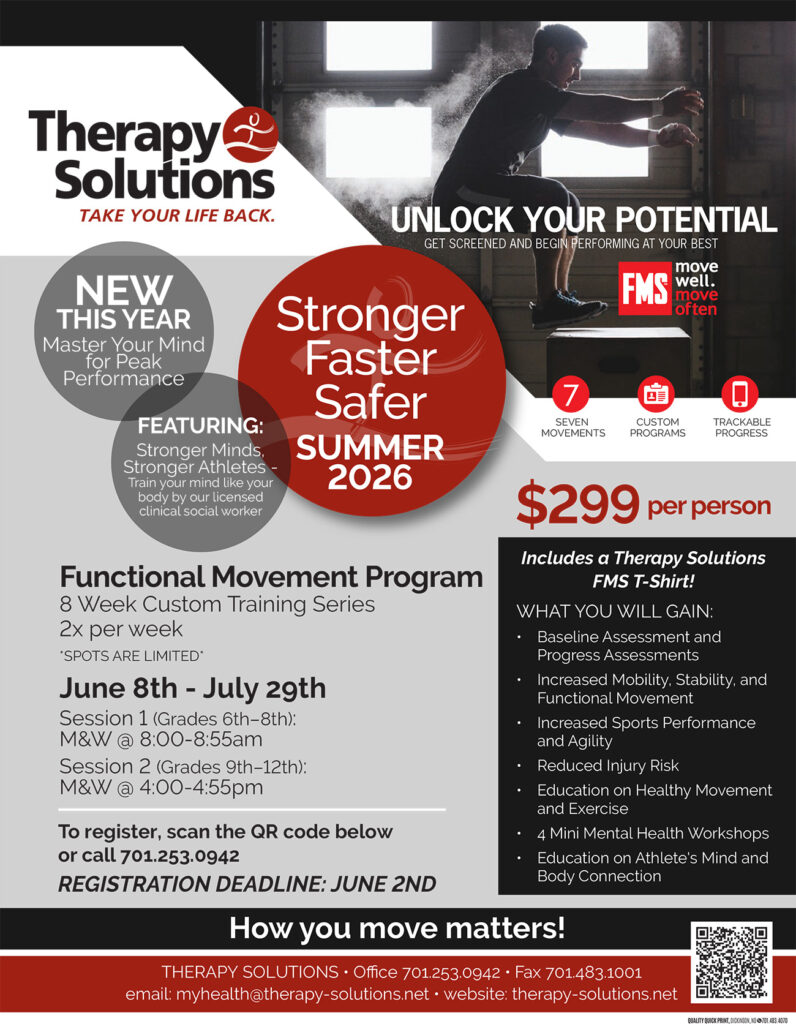
At Therapy Solutions, our athletic training program supports athletes and active individuals of all ages with one simple goal: to help people move better so they can keep doing what they love. One of the most effective tools we use to support that goal is a functional movement screening (FMS).
What Is a Functional Movement Screening?
At its core, an FMS is a movement assessment that evaluates how your body moves during basic patterns such as squatting, lunging, overhead reaching, and balancing. While these movements may seem simple, they can reveal a lot, including:
- Limited mobility from tight joints or muscles
- Poor stability and difficulty controlling movement
- Muscle imbalances between the right and left sides of your body
- Improper movement habits that can increase stress on joints
If left unaddressed, these issues can add up over time and put you at risk of injury. Furthermore, they often develop before pain or performance concerns. An FMS allows our team to identify and address them before they put too much strain on the body and become a problem.
Who Benefits From a Functional Movement Screen?
You don’t need to be injured to benefit from a screen, nor do you need to be a high-performing athlete. We often recommend functional movement screens for:
- Student athletes
- Adult recreational athletes
- Runners, lifters, and weekend warriors
- People returning to sport after injury
- Anyone starting a new training or exercise program
What Happens During the Screen?
Each screen is one-on-one and guided by our trained athletic therapist. During the screen, you will:
- Perform a series of seven fundamental movement patterns
- Be observed for balance, control, and symmetry
- Receive a score that reflects overall movement quality
This score shows how you move and provides clear directions for your next steps. With one simple test, we’ll have a sense of:
- Which movements need support
- Where your mobility is limited
- Where stability needs improvement
- Which areas may be overworking to compensate
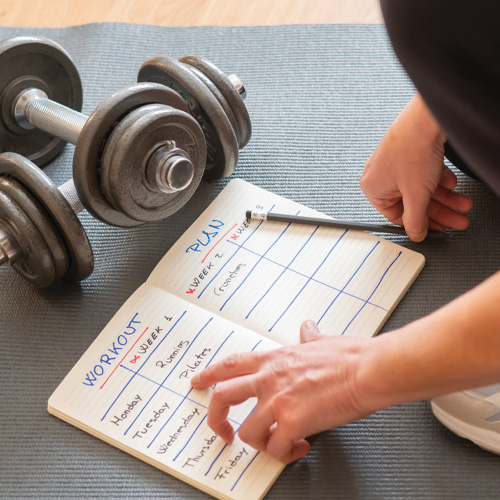
What Happens After the Screen?
A functional movement screen is the starting point for a personalized program to help you perform at your best. Using your FMS score, we’ll:
- Build a custom training plan tailored to your needs
- Guide you through corrective exercises, including:
-Mobility drills to restore joint motion
-Core stabilization exercises for better control
-Balance and coordination work
-Strength training with proper movement mechanics - Improve your movement efficiency
- Support any strength and conditioning work
- Reduce your injury risk during training and sport
Why Movement Quality Matters for Everyone
How you move matters more than many people realize. Poor movement patterns can place extra stress on joints, limit strength transfer, and increase fatigue. Over time, these patterns can raise the risk of overuse injuries and make everyday activities feel harder than they should.
Better movement helps the body work more efficiently. When joints move well and muscles provide proper support, balance improves, recovery is easier, and activity often feels more controlled.
The thing many don’t realize? This applies to more than competitive athletes. Anyone who wants to stay active, return to exercise, or avoid recurring aches can benefit from understanding how their body moves.
Athletic Training Month Is the Perfect Time to Schedule Your FMS
Athletic Training Month is the perfect time of year to learn more about how athletic training can help you meet your performance goals, and a functional movement screening at Therapy Solutions is a great place to start.
If you want to train smarter, reduce injury risk, and improve your body’s function, reach out to schedule your functional movement screen today. Your movement matters, and we’re here to support it.

Say Goodbye to Pain – Get Started with PT Now!
Ready to feel your best again? Come back to Therapy Solutions and let us help you achieve your wellness goals—book your appointment today!
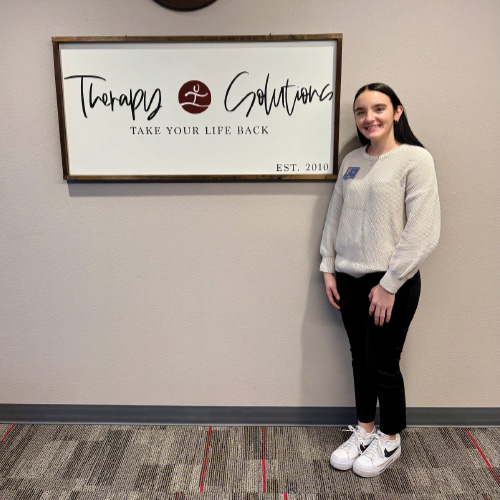
Intern Spotlight: Sydney Gerving
The Occupational Therapy Department has a new intern joining us until April 3rd! Sydney Gerving is currently attending the University of Mary, where she is completing her Doctorate of Occupational Therapy. She is now in her second year and expects to graduate in December 2026.
Sydney is originally from Bismarck, ND, and went to Bismarck High School. She still resides in Bismarck but is living north of Taylor while at Therapy Solutions. Sydney’s hobbies include spending time with her family and friends, staying active/working out, and watching/playing sports. She also enjoys playing cards and games.
After graduation, Sydney would like to work with the adult population and is still considering her desired setting.
Write Your Own Success Story

Love your experience with Therapy Solutions? Click the button to leave us a Google review—your feedback helps others find the care they need!
Thank You for Subscribing to Therapy Solutions

How to Heal: Become Aware
Why is it so important to be aware and mindful of your past hurts and wounds? Aren’t we supposed to live in the present and not dwell on the past? Yes, however, in order to let go of the past, we need to be aware of how it is affecting our present. We have to name it and see it and then tame it. When wounds/trauma memories occur, the brain does not store the trauma memories in narrative form, like other memories. The brain stores the trauma memory emotionally and sensorially. For example, let’s say you had a number of incidents from your childhood that made you “feel” you were not good enough. Every time you felt not good enough, your body stored this memory in your senses, not in a narrative type fashion. You felt your heart ache, you felt shame in your chest, and perhaps you isolated and used negative self-talk as a result. These feelings and sensations were stored in your body. Your body learned to recognize them and then to alert you to fight, flight, freeze or fawn to survive. Hence, a pattern is developed. In the present day, you can get triggered by a similar sensation while the situation means something very different. This pattern will continue if you do not become aware of the trigger from your past. As we get older, our brains become more developed, allowing us to better understand situations from our childhood that we couldn’t fully process at the time. Despite researching your worth, reading, and finding support through church—all of which helped you realize that your past self-perceptions were untrue—it seems one will still frequently struggle with feeling not good enough. We are often only logically aware of the belief that we are not good enough. It is important to remember, however, that trauma memories are not logical or narrative; they are felt. We must remain mindful of our emotional alarm system and how these feelings manifest.
Your body remembers your hurt and sometimes a sight, sound, smell, or person can trigger you. Triggers activate emotional and body memories, not event memories. Your brain does not remember it narratively like other memories. Memories of wounds/traumas are stored deep in your subconscious memory. Therefore, trauma/wound memories may be difficult to put into words (logic).
You may notice some people can get very defensive or hurt by something you say that was meant to be harmless or innocent. That is because, as trauma/wound memories are stored in our neural network, they can be activated (triggered) anytime you encounter sensory or emotional reminders of trauma. When this occurs, your brain immediately feels that it is in danger and prepares you to continue the pattern you have been doing since you were a child.
To heal, it is important to differentiate triggered feelings from regular feelings. Triggered reactions are typically sudden, intense, and slow to fade. Regular feelings ebb and flow, and they build more gradually to a peak. Triggered feelings tell us more about the past, while regular feelings tell us more about the present movement. If you are feeling triggered by your past, contact Therapy Solutions to talk to one of our mental health counselors and Take Your Life Back!
Congratulatory Corner:
Shelby Thorson (Physical Therapist Assistant) welcomed a baby girl, Steelie Jerry, on January 8th!

In The
Community
We are happy to announce that Therapy Solutions took home TWO first-place wins in the 2026 Best of the Best contest:
- Best Counseling Service
- Best Small Company to Work For (Under 50 Employees)
Thank you to everyone who voted for Therapy Solutions and our amazing staff!

Follow Us on Facebook!
Meet Our Team

Jessie Binstock
DPT, Athletic Trainer

Terry Halverson
MOTR/L

Adrienne Belland
MS, OTR/L



Jared Erie
OTR/L

Eric Halverson
OTR/L, Occupational Health Manager
Terry Halverson
MOTR/L


Doug Jilek
Systems Manager


Jeanne Kilzer
MS CCC-SLP


Miranda Kuhn
MS, OTR/L



Jennifer Rosario
DSW, LCSW

Heidi Schmidt
PTA, Athletic Trainer






Emily Carda
Athletic Trainer