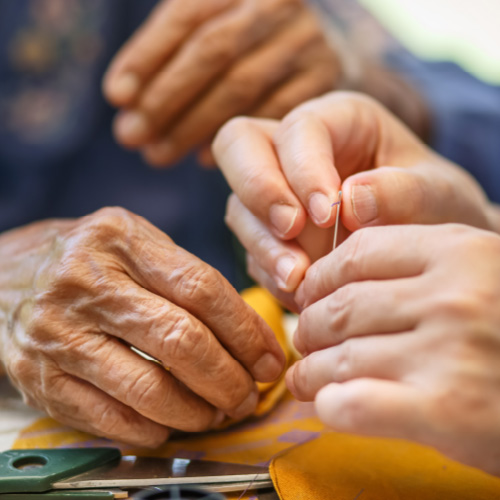
Occupational Therapy Month
April is Occupational Therapy Month, and at Therapy Solutions, we’re excited to highlight the many benefits of occupational therapy and how it can enhance daily life!
Are you struggling with pain, a medical condition, or mobility issues that make daily activities difficult and keep you from doing what you love? Occupational therapy is a great way to learn how to get over these hurdles, improve performance, and lower your pain symptoms.
Want to learn how occupational therapy can help relieve pain and enhance your abilities? If so, contact Therapy Solutions today to request an appointment.

What Is Occupational Therapy?
The American Occupational Therapy Association defines occupational therapy as “the only profession that helps people across the lifespan to do the things they want and need to do through the therapeutic use of daily activities (occupations). Occupational therapy practitioners enable people of all ages to live life to its fullest by helping them promote health, and prevent—or live better with—injury, illness, or disability.”
Occupational therapy supports individuals of all ages—helping children with disabilities thrive in school and social settings and assisting seniors in maintaining physical and cognitive well-being.
One example of the ways an OT can improve a patient’s daily function is through adaptations. For instance, if a patient is having trouble feeding themselves, an occupational therapist can help them to make adjustments and adaptations to utensils to make mealtimes easier. This personalized approach makes occupational therapy an essential part of healthcare.
Occupational therapy is also a very common form of treatment for patients recovering from surgery, healing from injuries, or living with chronic conditions that affect their quality of life.
Some conditions/situations where an OT’s guidance and care can be beneficial are as follows:
- Tendinitis
- Multiple sclerosis
- Parkinson’s disease
- Orthopedic conditions
- Recovery after burns/scar management
- Neurological conditions
- Carpal tunnel syndrome
- Down’s syndrome
- Cerebral palsy
- Autism
- Asperger’s syndrome
What To Expect From Occupational Therapy
If you’re struggling to do everyday activities such as showering, getting out of bed, opening doors, or getting dressed, occupational therapy could be a great option for you.
Therapy Solutions’s occupational therapy plans include:
- An individual assessment to determine conditions, pain points, abilities, and patient goals.
- Customized activities focused on the improvement of daily tasks and activities.
- A final evaluation to determine if goals were met and to make changes to the plan/create another treatment plan of action if necessary.
Occupational therapy and physical therapy complement each other and can be integrated into care plans to support patients with a wide range of conditions in regaining mobility, improving flexibility and range of motion, and restoring independence in their daily routines.
Hand Injury Prevention
Many of us are eager to start gardening and enjoying outdoor activities as warmer weather approaches. Gardening is a great way to stay active, but it also carries a risk of injuries like cuts, fractures, sprains, strains, and inflammation. Fear not! There are many things you can do to prevent hand injuries, including:
- Wearing protective gloves, especially when handling sharp tools or chemicals
- Grip with your whole hand to prevent wrist strains
- Avoid doing yard work when it’s dark outside
- Regularly stand up and stretch
- Use ergonomic tools that prevent stress on muscles and tendons
- Wear shoes that prevent slipping, so you don’t end up trying to break your fall with your hands
How Can Hand Therapy Help?
Hand therapy is a form of occupational therapy offered at Therapy Solutions that can reduce your overall risk of sustaining a hand injury, as well as help you recover if you’ve been hurt.
This form of therapy focuses on treating orthopedic upper-extremity issues to optimize the functional use of the arm and hand.
Hand therapy is used to treat several conditions surrounding the upper extremities, including but not limited to:
- Sprains/strains
- Fractures
- Amputations
- Carpal tunnel syndrome
- Lacerations
- Lymphedema
- Contractures
- Scar management
- Arthritis
- Sensory re-education after nerve injury
A Therapy Solutions hand therapist can work to help manage or alleviate the acute or chronic pain you may be experiencing. They can also create customized splints for the prevention or correction of injuries.
If you’re planning on getting outside this spring to do some yard work and want to make sure your hands are up to the challenge, hand therapy at Therapy Solutions is an excellent option to consider.
Take Care Of Yourself This Spring
Occupational therapy goes beyond addressing and preventing injuries. Therapeutic intervention takes into consideration all of your functional needs and implements activities to promote psychological well-being!
Ready to improve your quality of life and get back to doing what you love? Schedule an appointment with Therapy Solutions today to discover the life-changing benefits of occupational therapy!

Say Goodbye to Pain – Get Started with PT Now!
Ready to feel your best again? Come back to Therapy Solutions and let us help you achieve your wellness goals—book your appointment today!
Nevaeh’s Recipe:
No-Bake Oatmeal Peanut Butter Bars

- 1 cup creamy peanut butter (melted)
- 1/2 cup honey or maple syrup
- 2 3/4 cups rolled oats
- 1/2 cup chocolate chips (or other mix-ins you wish to do)
Directions:
- Line an 8×8 pan with parchment paper
- Combine the melted peanut butter and honey
- Mix in the oats and chocolate chips
- Press the mixture into the pan with a rubber spatula
- Refrigerate for a few hours, cut, and enjoy!
*Note: You can also add protein powder or substitute peanut butter for almond butter to make these healthier
Staff Book Club: “Shelf Care”
Non-Fiction Book Recommendation
The In-Between
by Hadley Vlahos, R.N.
5 stars ⭐️⭐️⭐️⭐️⭐️
“This book is written by a hospice nurse who shares 12 of her patient’s end-of-life journeys. It is remarkably heartwarming and shares the wisdom she received from each of her inspirational patients. I was deeply touched and comforted by these stories, which not only focus on dealing with loss but also on how to live our lives to the fullest.”
—Sierra, HR Generalist


Fiction Book Recommendation
The Last Mrs. Parish
by Liv Constantine
5 stars ⭐️⭐️⭐️⭐️⭐️
“This book has shocking turns and dark secrets that keep you guessing until the end. The Last Mrs. Parish is an addictive thriller.”
—Lori, Billing
Thank You for Subscribing to Therapy Solutions

Spring Cleaning for Mental Health. Declutter Your Mind and Life!
Spring is in the air, and with it comes a new sense of hope and renewal. Winter in North Dakota can be tough with the cold, gloom, and snow. The transition out of the “winter blues” can be an opportunity to make positive changes to your physical and mental health.
Spring cleaning is not just for your home but can also be for your mind, body, and spirit. To help start the new spring season refreshed, we can declutter some of our old habits and rejuvenate positive endeavors.
How to Declutter
Prioritize What Matters. Identify what is most important for your well-being—your health, relationships, or personal goals. Writing down your dreams and breaking them into actionable steps can bring clarity and purpose while easing mental clutter.
Tackle Pending Tasks. Write down lingering projects and schedule time to complete them. Start with small, manageable tasks, like maintaining appointments or tidying up a space. Taking action to reduce stress and mental load.
Break Bad Habits. Identify habits that negatively impact your mental health and replace them with healthier alternatives.
Clear Negative Thoughts. Reframe self-doubt and replace negative self-talk with confidence. TIP: Journaling can help release worries, shift perspectives, and declutter your mind.
Declutter Your Physical Space. Physical clutter can create mental clutter. Start small, clear out a closet or organize a drawer.
How to Rejuvenate
Move Your Body. Physical health supports mental well-being, even when it feels difficult. Simple activities like stretching or a short walk can boost your mood.
Nurture Positive Relationships and Habits. Focus on what makes you feel good—supportive friends, enjoyable activities, or healthy habits.
Renew Your Spirit. Mindfulness, gratitude, and deep breathing help clear negative energy. TIP: Speak gratitude aloud, reflect on what brings you peace, and replace self-criticism with positive affirmations like “I’m doing my best.”
Embrace Creativity. Creativity thrives with practice and space. TIP: Set aside a dedicated spot, start with a goal in mind, and reconnect with your childlike curiosity. Like a well-tended garden, creativity flourishes with consistent care.
If you would like to talk to someone about how to declutter your life to improve your mental health, contact us at Therapy Solutions and make an appointment with one of our mental health workers, and Take Your Life Back!
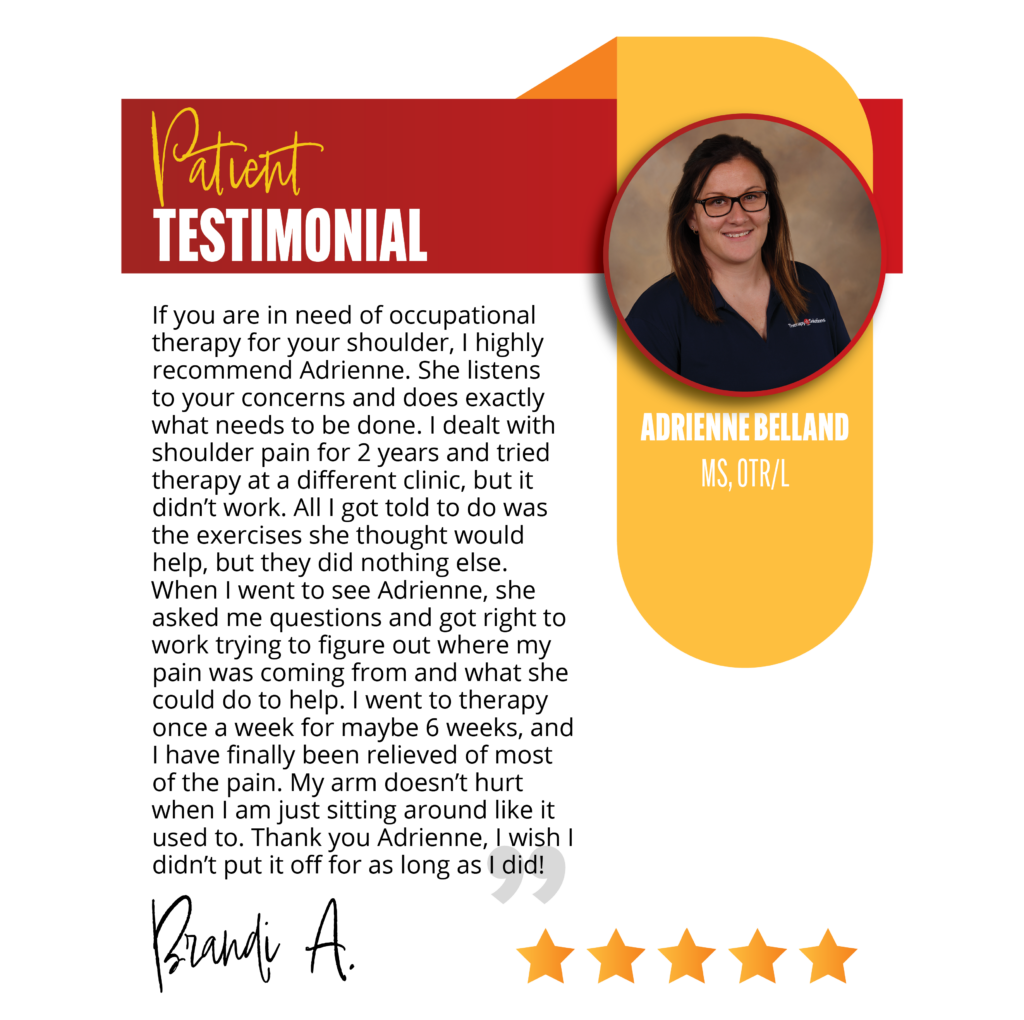
Write Your Own Success Story

Love your experience with Therapy Solutions? Click the button to leave us a Google review—your feedback helps others find the care they need!
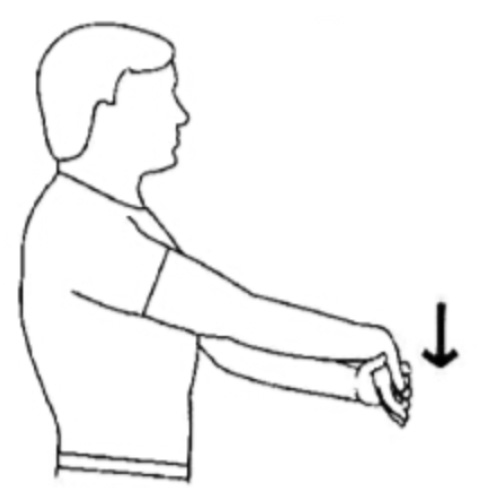
Ergonomics Stretch:
Wrist Flexor
-Position hand/palm up.
-Grasp fingers with other hand.
-Keep elbow straight.
-Pull fingers down, as shown.
-Repeat other side.
-Hold for at least 10 seconds.
“Focus on deep prolonged stretches to the inside forearm region, don’t bounce. If it seems too difficult to hold, start with the elbow slightly bent and then slowly attempt to extend the elbow.”
-Jared Erie OTR/L
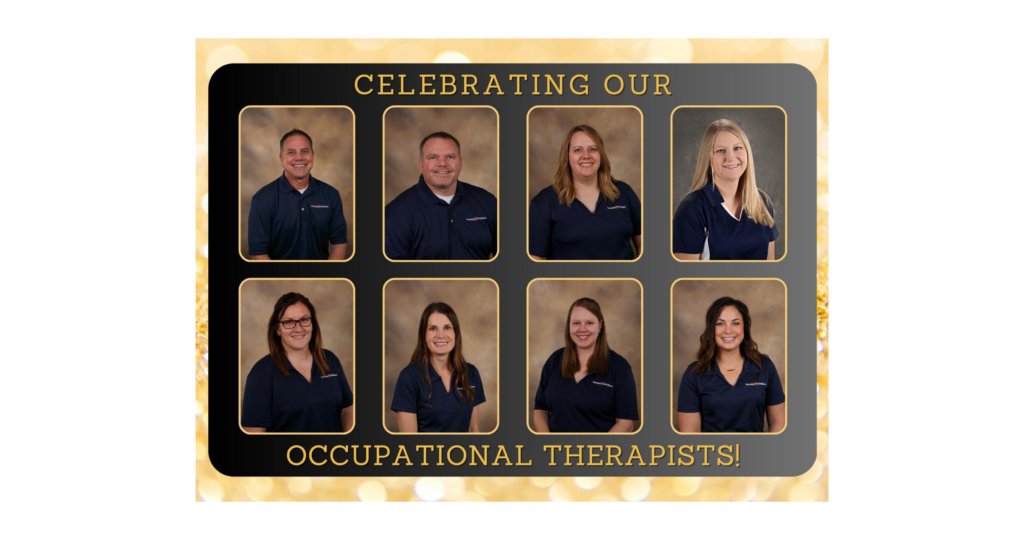
Celebrating Our OTs
April is Occupational Therapy Month and we would like to celebrate our OTs for the life-changing work they do!
- Jared Erie
- Eric Halverson
- Terry Halverson
- Erica Crespo
- Adrienne Belland
- Haylee Peters
- Miranda Kuhn
- Chelsea Theiler
Occupational therapy inspires hope and changes lives every day. We are so thankful for your endless hard work, dedication, and passion for helping others. Thank you for all that you do to make a meaningful difference in your patients’ lives!
Follow Us on Facebook!
Meet Our Team

Jessie Binstock
DPT, Athletic Trainer

Terry Halverson
MOTR/L

Adrienne Belland
MS, OTR/L



Jared Erie
OTR/L

Eric Halverson
OTR/L, Occupational Health Manager
Terry Halverson
MOTR/L


Doug Jilek
Systems Manager


Jeanne Kilzer
MS CCC-SLP


Miranda Kuhn
MS, OTR/L



Jennifer Rosario
DSW, LCSW

Heidi Schmidt
PTA, Athletic Trainer
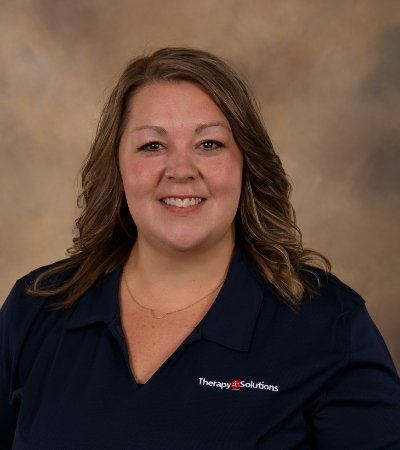





Emily Carda
Athletic Trainer